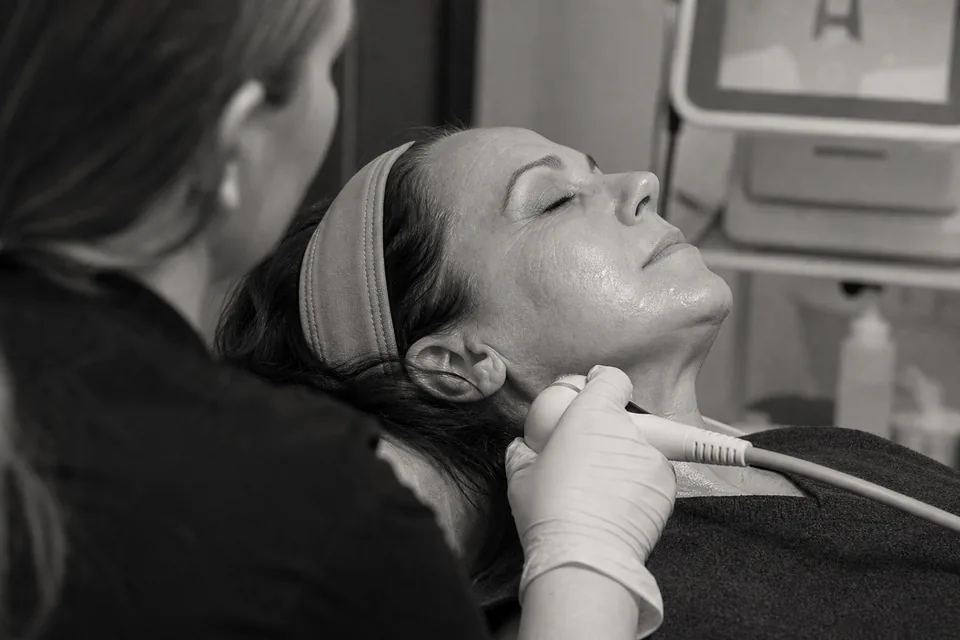
What skin tightening is
Skin tightening devices deliver controlled heat below the surface of the skin. The heat is meant to contract existing collagen and prompt the skin to build more over the following months. It is a gradual change, often described as subtle firming rather than a lift, and it is a different decision from surgery.
Clinics use several technologies. Radiofrequency heats tissue with electrical energy and is used on the face and body. Microfocused ultrasound targets specific depths beneath the skin, often on the brow, chin and neck. Radiofrequency microneedling combines fine needles with radiofrequency energy, and some lasers and light devices also heat the deeper layers. A consultation is where a provider explains which approach, if any, suits your skin. Related reading includes our guides to microneedling near me and body contouring near me.
How the appointment usually goes
The first visit is a consultation. The provider looks at your skin, asks about your goals and health history and explains the device, the expected number of sessions and the likely comfort level. On treatment day the skin is cleaned and a gel or coupling layer may be applied. The provider moves the device across the area in passes while monitoring temperature. You may feel warmth, heat or brief discomfort, and some clinics offer cooling or a numbing option where appropriate.
- Arrive with clean skin and no makeup on the treatment area.
- Share your full list of medications and any implants or devices in your body.
- Ask how your skin should be prepared, especially around sun exposure.
Session length and how often
Sessions often take around 30 to 90 minutes depending on the area and device. Some devices are used once with possible repeat visits after many months, while others are booked as a series of sessions a few weeks apart. Your provider sets the plan based on the device and your skin.
Recovery and aftercare in general terms
Many people return to their usual routine the same day or within a few days. Redness, mild swelling and tenderness are common for a short time, and radiofrequency microneedling can leave the skin pink and textured for a few days.
- Follow your provider's written aftercare instructions.
- Use gentle skincare and daily sunscreen on the treated area.
- Avoid heat, saunas and strong active products until your provider says it is fine.
- Contact the clinic if you notice blistering, severe pain or swelling that does not settle.
How long results usually last
Collagen builds slowly, so changes often appear over about two to six months for many people. Results vary widely with age, skin quality and the device used, and natural aging continues. Many clinics suggest maintenance sessions over time. No provider can promise a specific result.
Reasons a provider may say no or ask you to wait
A licensed provider reviews your health before any energy treatment and may suggest waiting or another option. Common reasons include:
- Pregnancy or breastfeeding.
- An active skin infection, cold sore or open wound in the area.
- A pacemaker or other implanted electrical device, or metal implants in the area for some devices.
- Certain medications, such as blood thinners or recent isotretinoin.
- Recent sun exposure or a tan, which matters for some devices.
- Certain autoimmune conditions or conditions that affect healing.
- Significant skin laxity, where a provider may say surgery is the more realistic path.
Ask a licensed provider.
What skin tightening costs
Price varies by clinic, ask for a quote. The device and the size of the area shape most of the price.
- The device and technology used.
- The area treated, from under the chin to the full face and neck or a body area.
- One treatment or a scheduled series of sessions.
- The provider's training and the type of practice.
- City and maintenance visits over time.
Questions to ask before you book
- Who performs the treatment, and what is their license and training?
- Which device do you use, and why is it suited to my skin?
- How many sessions do you expect, and when might I see changes?
- What are the common side effects, and how do you handle complications?
- Is skin tightening realistic for my goals, or would you suggest another option?
Find a skin tightening clinic near you
Search med spas and dermatology practices by city or ZIP and find a clinic near you that offers skin tightening. You can also browse every med spa near me.
FAQ
Does skin tightening really work?
Many people see subtle firming as collagen rebuilds over a few months. Results vary, and the change is usually milder than surgery. A provider can tell you what is realistic after looking at your skin.
Is skin tightening painful?
Most people feel heat or brief discomfort during the passes. Comfort varies by device and area, and clinics explain cooling or numbing options during the consultation.
What is the difference between radiofrequency and ultrasound skin tightening?
Radiofrequency heats tissue with electrical energy across an area. Microfocused ultrasound targets specific depths beneath the skin. A provider chooses based on the area and your skin.
How many skin tightening sessions do I need?
It depends on the device. Some are used once with possible repeats much later, others in a series a few weeks apart.
Is there downtime after skin tightening?
Many people return to normal activities the same day or within a few days. Redness and mild swelling are common for a short time.
General information, not medical advice. A licensed provider decides whether a treatment is right for you.
Performed by licensed medical professionals. Who may perform it depends on your state's rules.