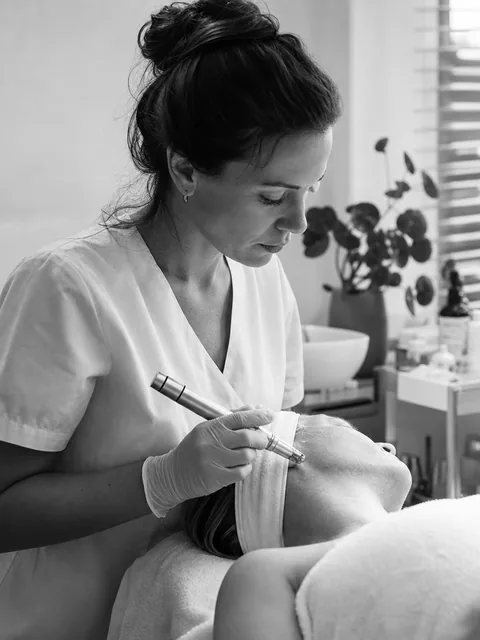
What microneedling is
Microneedling, sometimes called collagen induction therapy, uses a pen-shaped device fitted with tiny sterile needles. The needles make controlled micro-channels in the skin. The skin responds by repairing itself, a process that involves new collagen and elastin over the following weeks.
Some clinics combine microneedling with radiofrequency energy, which heats deeper layers as the needles enter. This version is usually more intensive and may come with longer recovery. Some also apply serums or platelet-rich plasma during treatment. Ask exactly which version a clinic offers.
What people use it for
- Uneven texture and enlarged-looking pores
- Mild to moderate acne scars
- Fine lines and early loss of firmness
- Some types of uneven tone
- Stretch marks on the body
If you are deciding between this and an acid treatment, read microneedling vs chemical peel and the chemical peel guide.
How the appointment usually goes
A first visit starts with a consultation about your skin, your goals, your health history and the products you use. You may be asked to pause some active skincare such as retinoids for a few days beforehand.
On the day, the skin is cleansed and a numbing cream is applied for a period before treatment. The provider moves the device across the skin in passes, adjusting needle depth for each area. Many people feel a vibrating, scratchy sensation, with bony areas more sensitive. A calming serum or mask is often applied at the end.
Session length and how many sessions
A full-face session usually takes about 30 to 60 minutes, plus time for numbing. Many people have a series of about 3 to 6 sessions spaced roughly four to six weeks apart, with more often suggested for scarring. Maintenance sessions later are common.
Recovery and aftercare in general terms
For many people, skin looks pink to red and feels warm, similar to a mild sunburn, for one to three days. Some tightness, dryness and light flaking follow as the skin renews. Radiofrequency microneedling may bring more swelling and a longer recovery.
Providers often ask you to keep skincare gentle, skip makeup for a short time, avoid sweating heavily and protect the skin from sun while it heals. Follow the instructions your own provider gives. Read microneedling recovery for a closer look at the first days.
How long results usually last
Microneedling works gradually. Many people see a fresher look within a week or two, while changes in texture and scarring build over several months as collagen develops. Improvements can last a long time, though skin continues to age, so many people keep a maintenance plan. Results vary with skin type, the concern treated and how many sessions you have. Read microneedling before and after for what changes and what tends not to.
Reasons a provider may say no or ask you to wait
A careful provider screens before treating and may decline or suggest waiting in cases such as:
- Pregnancy or breastfeeding
- Active acne breakouts, a skin infection, rash or cold sore in the area
- Certain medications, such as recent isotretinoin or blood thinners
- A history of keloid scarring
- Certain skin conditions such as active eczema, psoriasis or rosacea flares in the area
- Recent sunburn or recent strong treatments in the same area
Ask a licensed provider.
What it costs
Price varies by clinic, ask for a quote. Most clinics price per session, and some offer a series at a set price.
What moves the price
- Standard microneedling or the radiofrequency version
- Add-ons such as serums or platelet-rich plasma
- The size of the area treated
- How many sessions your goal needs
- The provider's training
- Your city
The American Society of Plastic Surgeons publishes national average fees each year in its procedural statistics report, and those averages exclude facility costs. Read the full microneedling cost guide.
Questions to ask at the consultation
- Who performs the treatment, and what is their license and training?
- Which device do you use, and is it standard or radiofrequency microneedling?
- How many sessions do you expect for my concern?
- What downtime should I plan for?
- Which skincare should I pause before and after?
- How do you keep the device and needles sterile?
- Do you price per session or as a series?
Find microneedling near you
Search the directory for microneedling to see clinics near you that list it, then request an appointment in a few steps. You can also browse every med spa near me by city.
Microneedling questions
Does microneedling hurt?
Most clinics apply numbing cream first, so many people describe a scratchy, vibrating feeling rather than pain. Sensitivity varies by area.
How long is recovery after microneedling?
For many people, redness lasts one to three days, followed by some dryness and light flaking. Radiofrequency versions can take longer. See microneedling recovery.
How many sessions do I need?
Many people have about 3 to 6 sessions four to six weeks apart. Scarring often needs more.
Is at-home microneedling the same?
No. Clinic treatments use sterile medical devices at depths chosen by a trained provider. Talk to a licensed provider before using any needling device on your skin.
How much does microneedling cost?
Price varies by clinic, ask for a quote. See microneedling cost.