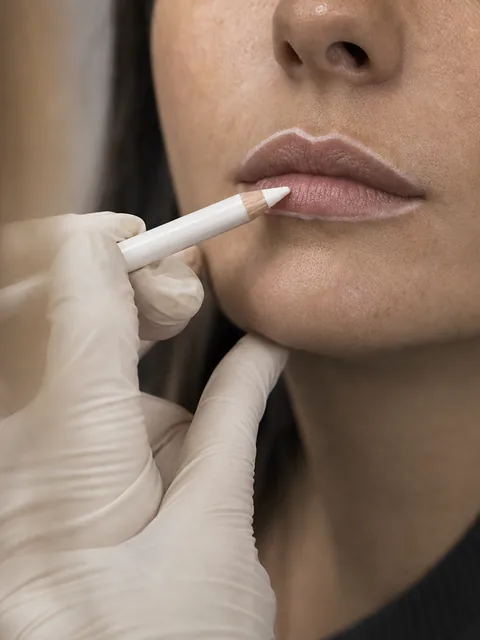
What lip filler is
Lip filler is a soft injectable gel placed in and around the lips. Most lip fillers today are made of hyaluronic acid, a substance that occurs naturally in the body and holds water. Brands differ in how firm or flexible the gel is, so a provider may choose one product for subtle hydration and another for shape along the border of the lip.
What people ask for
- A clearer lip border and a defined cupid's bow
- Balance between the upper and lower lip
- Gentle volume where lips have thinned with age
- Smoother vertical lines above the upper lip
- Correction of mild unevenness between the two sides
Lip filler is different from a lip flip, which uses a neuromodulator to relax the muscle so the upper lip turns slightly outward. Read how long does a lip flip last and botox vs filler to see how they compare. Lip filler is one type of dermal fillers, which are also used in the cheeks, chin and jawline.
How the appointment usually goes
A first visit starts with a consultation. The provider asks about your health history, medications and any previous filler, studies the shape of your lips at rest and when you talk, and agrees with you on a realistic goal. It helps to bring photos of looks you like and ones you want to avoid.
The lips are cleaned and numbed, often with a topical cream, and many fillers also contain a local anesthetic. The provider places the filler in small amounts with a fine needle or a blunt cannula, checking symmetry as they go. Many people describe pressure and a stinging feeling that eases quickly. Ice may be applied at the end.
Session length and how many sessions
Expect around 30 to 60 minutes including numbing, with the injections themselves taking a shorter part of that. Many people reach their goal in one session. Some providers prefer to build volume gradually over two visits a few weeks apart for a softer result. A follow-up visit about two weeks later is common, once swelling has settled.
Recovery and aftercare in general terms
Swelling is normal and is usually most noticeable in the first one to three days. Lips can look larger or uneven while they settle, which is why the result is judged after about two weeks. Tenderness and bruising are common and tend to fade within a week for many people.
Providers often ask you to avoid pressing on the lips, very hot drinks, alcohol and hard exercise for a short time. Follow the instructions your own provider gives. Contact the clinic promptly if you notice severe or increasing pain, skin that turns pale or dusky, or any change that worries you.
How long results usually last
For many people, lip filler lasts about 6 to 12 months. The lips move constantly, so filler there often breaks down sooner than in quieter areas such as the chin. Product choice, metabolism and how much volume was placed all play a part. It varies, and a provider cannot promise a fixed timeline. Hyaluronic acid filler can usually be dissolved by a provider if needed, which is one reason many people choose it.
Reasons a provider may say no or ask you to wait
A careful provider screens before treating and may decline or suggest waiting in cases such as:
- Pregnancy or breastfeeding
- An active cold sore, skin infection or rash on or near the lips
- Certain medications, including blood thinners
- Recent dental work or a dental procedure planned within a short time
- Certain autoimmune conditions or a history of severe allergic reactions
- A known allergy to any ingredient in the product
Ask a licensed provider.
What it costs
Price varies by clinic, ask for a quote. Clinics usually price lip filler by the amount of product used, so the plan you agree on in the consultation shapes the quote.
What moves the price
- The amount of product your goal needs
- The product brand and its formulation
- The provider's training and experience with lips
- Your city
- Whether a follow-up or touch-up visit is included
- How often you return for maintenance
The American Society of Plastic Surgeons publishes national average fees each year in its procedural statistics report, and those averages exclude facility costs. Read the full lip filler cost guide.
Questions to ask at the consultation
- Who will inject me, and what is their license and training?
- Which product do you recommend for my goal, and why?
- Do you use a needle or a cannula?
- Can you show me how my lips are likely to look when the swelling settles?
- Do you keep hyaluronidase on site in case filler needs to be dissolved?
- Is a follow-up visit included?
- What should I do if something looks or feels wrong after I leave?
Find a clinic that offers lip filler
Search the directory for lip filler to see med spas and medical practices near you that list it, then request an appointment in a few steps. Browse cities on the med spa near me page or start with lip filler chicago.
Lip filler questions
Does lip filler hurt?
Most people feel pressure and a short sting. Numbing cream and the anesthetic in many fillers make it more comfortable. Lips are sensitive, so ask your provider about comfort options.
How long does swelling last?
Swelling is usually strongest in the first one to three days and settles over about two weeks for many people. Judge the result after that.
How long does lip filler last?
For many people about 6 to 12 months, depending on the product, the amount and your metabolism.
Can lip filler be dissolved?
Hyaluronic acid filler can usually be dissolved by a provider with an enzyme called hyaluronidase. Ask whether your clinic keeps it on site.
What is the difference between lip filler and a lip flip?
Filler adds volume and shape with a gel. A lip flip relaxes the muscle so the upper lip turns out slightly. Read how long does a lip flip last.