What a facial is
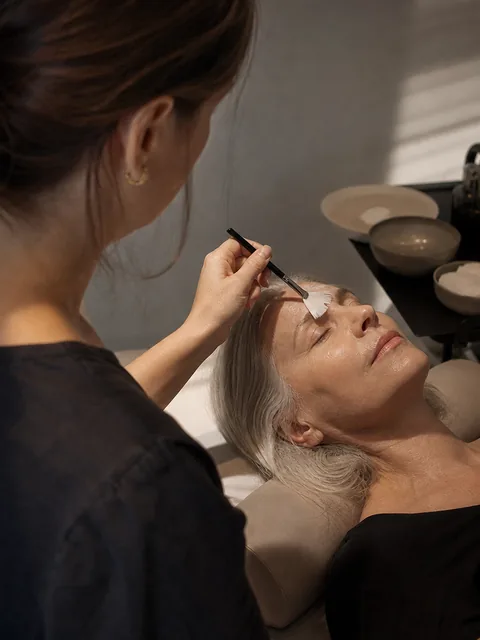
A facial is a skin treatment performed by a trained, usually licensed, esthetician. Most follow a familiar order: cleanse, skin analysis, exfoliation, steam, extractions if needed, a mask, massage and a finishing moisturizer with sun protection. The esthetician adjusts products and steps to your skin on the day.
Common types of facials
- Classic or signature facial. A full cleanse and care routine tailored to your skin type.
- Deep cleansing facial. Extra focus on congestion, clogged pores and extractions.
- Hydrating facial. Products and masks aimed at dry or dehydrated skin.
- Calming facial. Gentle products for sensitive or reactive skin.
- Acne facial. Cleansing and extractions with products suited to breakout-prone skin.
- Device facials. Treatments such as a HydraFacial, LED light or microcurrent, often added to a classic facial.
A facial focuses on the surface of the skin. For deeper concerns such as scarring or pigment, a provider may suggest a chemical peel or microneedling, which are separate treatments with their own rules.
How the appointment usually goes
You usually fill in a short form about your skin, your routine and any sensitivity, then change into a robe or simply lie back with your neckline uncovered. The esthetician looks at your skin under a light, explains what they see and chooses the products.
The treatment itself is calm and hands-on. Steam softens the skin, extractions clear clogged pores if needed, and a mask is often left on while your hands, neck or shoulders are massaged. You can ask for gentler extractions or to skip steps you do not enjoy. At the end, many estheticians suggest small changes to your home routine.
Session length and how many sessions
Most facials last about 45 to 90 minutes. Express versions are shorter. One visit leaves many people with fresher, softer skin. Estheticians often suggest a regular rhythm, such as every four to six weeks, which matches how the outer layer of skin renews.
Recovery and aftercare in general terms
There is usually no downtime. Skin may look a little pink after extractions or massage, which typically fades within a few hours. Some people notice a small breakout in the following days as pores clear. Estheticians often suggest skipping heavy makeup, strong exfoliants and intense heat for the rest of the day, and wearing sun protection. Follow the advice your own esthetician gives.
How long results usually last
The glow of a facial is usually most visible for a few days and fades over a couple of weeks for many people. Regular visits and a consistent home routine help keep skin clear and comfortable. Results vary with skin type, season and daily care.
Reasons a provider may say no or ask you to wait
An esthetician may adjust the treatment, skip certain steps or suggest waiting in cases such as:
- Pregnancy or breastfeeding, where some ingredients, devices or steps may be avoided
- An active skin infection, rash, cold sore or open wound in the area
- Certain medications, such as recent isotretinoin or prescription retinoids
- A recent sunburn, recent waxing or a strong treatment in the same area
- Flares of rosacea, eczema or very sensitive skin
- Allergies to ingredients in the products
Ask a licensed provider.
What it costs
Price varies by clinic, ask for a quote. Spas and clinics usually list a base facial and price add-ons separately.
What moves the price
- The type and length of the facial
- Add-ons such as LED light, a mask, a light peel or microcurrent
- The setting, such as a day spa, med spa or dermatology practice
- The esthetician's experience
- Membership or series pricing for regular visits
- Your city
Questions to ask at the consultation
- Is the person doing my facial a licensed esthetician?
- Which facial do you recommend for my skin type, and why?
- Which products will you use, and can you avoid an ingredient I react to?
- Do you do extractions, and how gently?
- What is included, and what are the add-on prices?
- Are any add-ons performed by a licensed medical professional?
- How often do you suggest coming back?
Find a facial near you
Search the directory for facials to see spas and clinics near you that list them, then request an appointment in a few steps. You can also browse every med spa near me by city.
Facial questions
How often should I get a facial?
Many estheticians suggest every four to six weeks, but it depends on your skin, your goals and your budget.
Do extractions hurt?
They can feel uncomfortable for a moment. A good esthetician works gently and stops if you ask.
Is it normal to break out after a facial?
A small breakout in the following days can happen as pores clear. If irritation is strong or lasts, contact the spa or clinic.
What is the difference between a facial and a HydraFacial?
A HydraFacial is a branded device treatment with set steps. A classic facial is shaped by the esthetician's hands and products. Read the hydrafacial near me guide.
How much does a facial cost?
Price varies by clinic, ask for a quote. The type of facial and add-ons drive most of the difference.