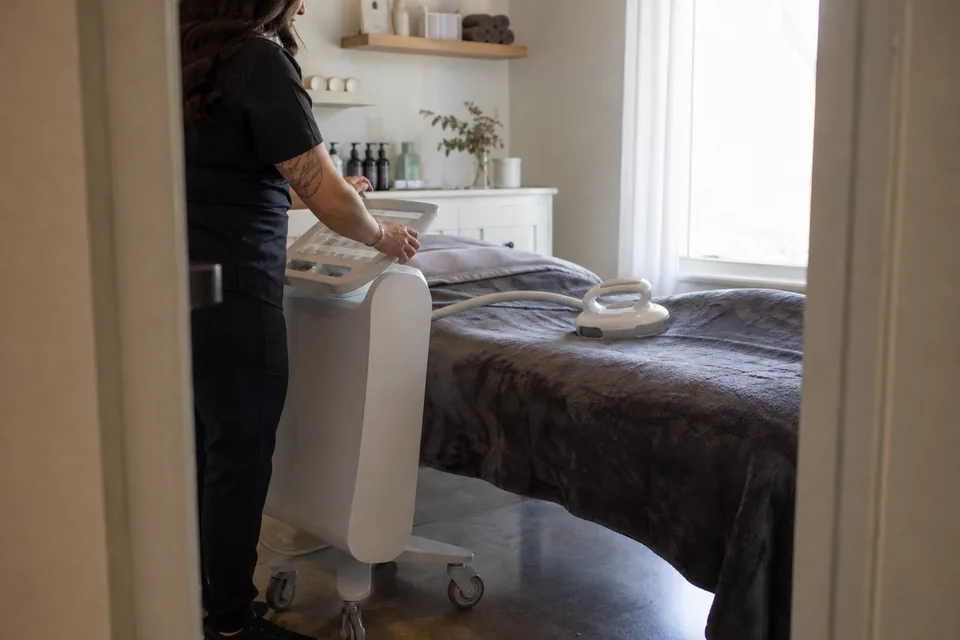
What body contouring is
Body contouring is a broad name for treatments that change the shape of an area without surgery. Most devices fall into a few groups. Cryolipolysis, often known by the brand name CoolSculpting, cools fat cells so the body clears them over the following weeks. Heat-based devices use radiofrequency or laser energy to target fat or firm the skin. Electromagnetic devices cause strong muscle contractions to tone areas such as the abdomen and buttocks.
Common areas include the abdomen, flanks, thighs, upper arms, under the chin and the back. These treatments do not replace diet, exercise or medical care for weight, and they do not treat the fat around internal organs. For a closer look at fat freezing, read our guide to coolsculpting near me. For firming loose skin, see skin tightening near me.
How the appointment usually goes
It begins with a consultation. The provider asks about your goals, health history and weight stability, examines the area and explains whether a device suits you and how many sessions it might take. On treatment day the area is marked and the device is placed or moved over the skin. Depending on the technology you may feel cold, warmth, pressure, tugging or strong muscle contractions. Many people read or rest during the session.
- Wear comfortable clothing that is easy to remove around the area.
- Share all medications and any implants, devices or recent surgeries.
- Ask how to plan the sessions around events or travel.
Session length and how often
A session often takes about 30 to 60 minutes per area, and some plans treat several areas in one visit. Fat reduction devices may need one or more sessions spaced several weeks apart. Muscle toning devices are often booked as a series over a few weeks, with maintenance visits later. Your provider sets the schedule for the device used.
Recovery and aftercare in general terms
Most people go back to normal activities the same day. Redness, swelling, tenderness, numbness or muscle soreness can last from a few days to a few weeks depending on the device.
- Follow your provider's aftercare instructions for the device used.
- Keep up regular activity and stable habits so changes are easier to see.
- Contact the clinic if pain grows, the area swells more over time or the skin changes in an unexpected way.
- Ask your provider about rare side effects of the specific device during the consultation.
How long results usually last
Changes from fat reduction devices often appear gradually over about one to three months for many people. Fat cells that are cleared do not come back, but remaining fat cells can grow with weight gain. Toning results usually need maintenance. Results vary, and no provider can promise an exact outcome.
Reasons a provider may say no or ask you to wait
A licensed provider checks your health and goals first and may suggest another path. Common reasons include:
- Pregnancy or breastfeeding.
- An active skin infection, wound or rash in the area.
- A pacemaker, metal implants or other devices in or near the area, for some technologies.
- Cold-related conditions such as cryoglobulinemia or cold urticaria, for fat freezing devices.
- A hernia in or near the area, or recent surgery there.
- Certain medications, such as blood thinners.
- Goals that are about weight loss rather than shape, where a doctor's advice comes first.
Ask a licensed provider.
What body contouring costs
Price varies by clinic, ask for a quote. Plans are usually priced by area and number of sessions.
- The device and technology used.
- The number of areas and the size of each area.
- The number of sessions in the plan and any maintenance visits.
- The provider's training and type of practice.
- City and any package pricing the clinic offers.
Questions to ask before you book
- Who performs the treatment, and what is their license and training?
- Which device do you recommend for my area, and why?
- How many sessions do you expect, and when might I notice a change?
- What are the common and rare side effects of this device?
- Am I a realistic candidate, or would another option suit me better?
Find a body contouring clinic near you
Search med spas and practices by city or ZIP and find a clinic near you that offers body contouring. You can also browse every med spa near me.
FAQ
Is body contouring the same as weight loss?
No. Nonsurgical body contouring refines the shape of specific areas for people close to their goal weight. It is not a weight loss treatment.
How long does it take to see body contouring results?
Fat reduction changes often appear gradually over about one to three months for many people. Toning devices can show change over the course of a series.
Does body contouring hurt?
It depends on the device. People describe cold, warmth, pressure, tugging or strong muscle contractions, and soreness for a few days is common.
Are body contouring results permanent?
Cleared fat cells do not return, but remaining fat cells can grow with weight gain. Toning results usually need maintenance.
What is the difference between body contouring and CoolSculpting?
CoolSculpting is one brand of cryolipolysis, a fat freezing device. Body contouring is the broader group that also includes heat and muscle toning devices.
General information, not medical advice. A licensed provider decides whether a treatment is right for you.
Performed by licensed medical professionals. Who may perform it depends on your state's rules.