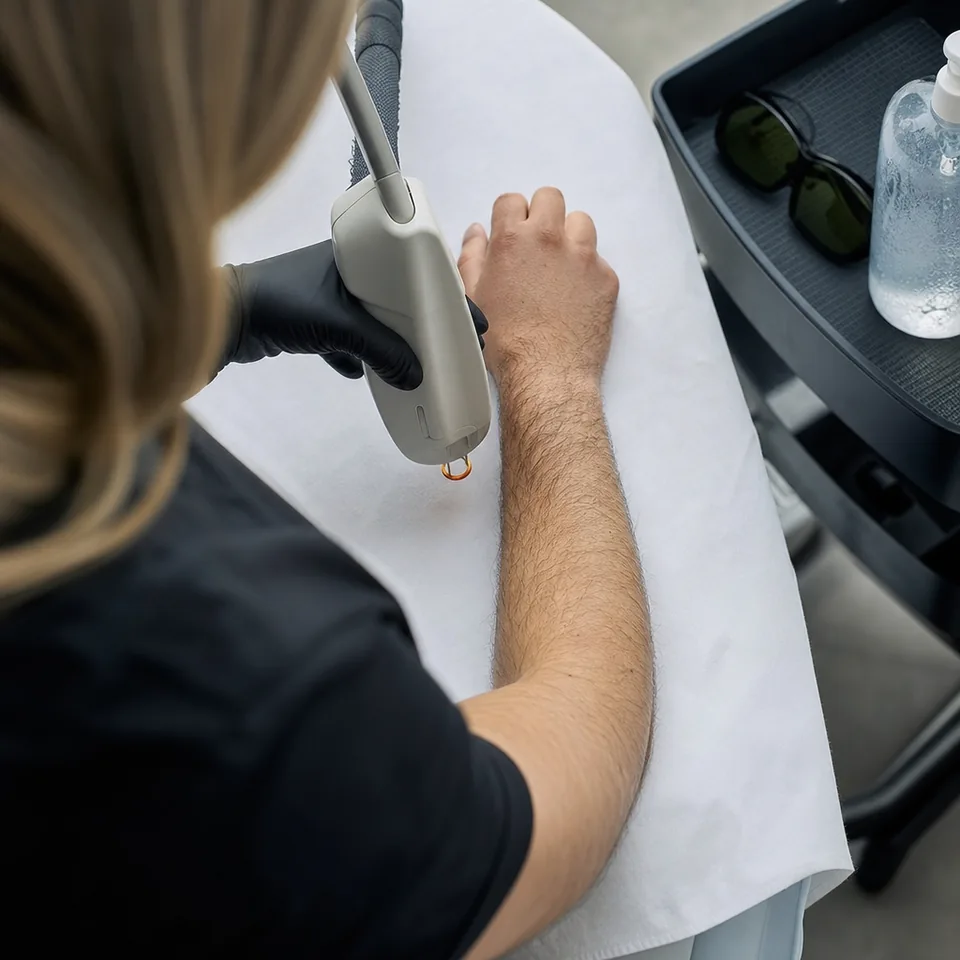
Why there is no single price
Laser hair removal works on hair in an active growth stage, so it takes several sessions spaced weeks apart. How many you need depends on your hair color and thickness, your skin tone, the area and hormones. A provider sets the plan after a consultation, and clinics set their own fees. Price varies by clinic, ask for a quote.
What changes the price
- **The size of the area.** Small areas such as the upper lip or underarms cost less per session than full legs or the back.
- **Number of sessions.** Most plans involve a series, and the total follows the number of sessions you need.
- **Hair and skin type.** Coarse dark hair on lighter skin often responds faster. Some combinations need more sessions or a specific laser.
- **The device.** Clinics use different lasers suited to different skin tones, and newer equipment can change pricing.
- **Provider training and setting.** A dermatology practice, a physician-supervised med spa and a laser center may price differently.
- **City and neighborhood.** Local costs and competition shape fees.
- **Touch-up sessions.** Many people return for occasional maintenance after the main course.
Per session, per area and package pricing explained
Clinics usually price laser hair removal per session for each area, or as a package of sessions for an area bought together. Packages often lower the price of each visit, but check what happens if you need more sessions than the package covers, or fewer. Some clinics offer memberships that cover several areas over a year. Ask for the full course total, not only the price of one session.
Thinking about maintenance and long term cost
After the main series, many people see a lasting reduction in hair, and some return for touch-ups once or twice a year, depending on the area and hormones. Results vary and are not guaranteed. A realistic budget adds the full course and possible touch-ups, and compares that with what you currently spend on shaving or waxing near me over the same years.
Where national averages come from
The American Society of Plastic Surgeons publishes national average fees each year in its procedural statistics report, including laser hair removal. Those averages exclude facility and product costs and other related expenses, and they vary by region, so they work as orientation, not as a quote. A national figure is usually per session, not for a full course.
How to ask for a quote
- How many sessions do you expect for my area, hair and skin type?
- What is the total for the full course, and what does a package include?
- What happens if I need more sessions than the package covers?
- Which laser do you use, and is it suited to my skin tone?
- Who performs the treatment, and what is their license and training?
- Is a test spot or consultation included?
Red flags to watch for
- A price far below every other clinic nearby, with no clear explanation.
- No licensed or properly supervised provider, as your state requires.
- No consultation, skin assessment or test spot.
- Promises of complete, guaranteed hair removal after one or two sessions.
- Pressure to pay for a large package on the spot.
Compare clinics near you
Read our guide to laser hair removal near me, compare electrolysis vs laser hair removal, then find a clinic near you and request a quote.
FAQ
Why is laser hair removal priced per session?
It takes a series of sessions to treat hair in different growth stages, so clinics price each visit or a package of visits for an area.
Are laser hair removal packages worth it?
Packages often lower the price per visit. Check how many sessions you are likely to need and what happens if you need more or fewer.
Is laser hair removal cheaper than waxing over time?
For some people the full course costs less than years of regular waxing, but it depends on the area, the number of sessions and touch-ups.
Does skin tone affect laser hair removal cost?
It can. Some skin and hair combinations need a specific laser or more sessions, which can change the total.
General information, not medical advice. A licensed provider decides whether a treatment is right for you.
Performed by licensed medical professionals. Who may perform it depends on your state's rules.