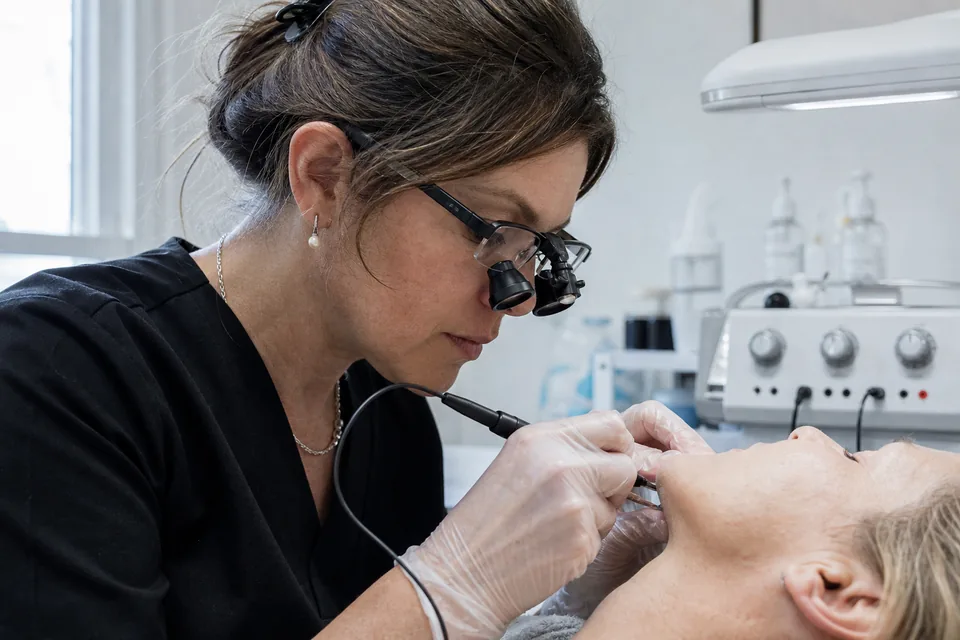
What electrolysis is
During electrolysis, a trained electrologist slides a hair-thin probe into the natural opening of a hair follicle and delivers a brief current. The current is meant to damage the part of the follicle that grows hair, and the treated hair is then lifted out with tweezers. The U.S. Food and Drug Administration describes electrolysis as a method for permanent hair removal, and results still depend on the person, the area and the number of completed sessions.
There are three common methods. Galvanic uses a chemical reaction created by direct current. Thermolysis uses heat from a high-frequency current. The blend method combines both. Because electrolysis does not rely on pigment in the hair, it can treat light, gray, red and white hair, which many lasers cannot. To weigh the two approaches side by side, read electrolysis vs laser hair removal, or start with our guide to laser hair removal near me.
How the appointment usually goes
A first visit usually starts with a consultation about the area, your hair growth, your skin and your health history. The electrologist cleans the skin and works under magnification, treating hairs one by one. You feel a quick sting or warmth with each follicle. Some providers offer cooling or a numbing option where state rules allow, and they explain what is possible during the consultation.
- Let hairs grow out slightly so the electrologist can see and grip them, as your provider advises.
- Avoid tweezing or waxing the area between visits, since it disturbs the follicles being treated.
- Arrive with clean skin and no makeup or lotion on the area.
- Bring a list of medications for the consultation.
Session length and how often
Sessions range from about 15 minutes to an hour or more, depending on the area. Hair grows in cycles, and only hairs in an active growth stage respond well, so electrolysis takes a series of visits. Many people come weekly or every other week at first, then less often as regrowth slows. A small area such as the upper lip can take many months of regular visits, and larger areas take longer.
Recovery and aftercare in general terms
Redness and slight swelling around treated follicles are common for a few hours to a day. Some people see small pinpoint scabs, which providers ask you to leave alone.
- Keep the area clean and avoid touching it for the rest of the day.
- Skip makeup, heavy creams, saunas and intense workouts for about a day, as many providers suggest.
- Use sun protection on treated skin.
- Contact your provider if the area becomes painful, swollen or looks infected.
How long results usually last
Hair that is successfully treated in the growth stage often does not return, which is why electrolysis is described as permanent hair removal. Reaching that point usually takes a full course of visits, and new hairs can appear later in life due to hormones or other changes. Results vary from person to person, and no provider can promise an exact outcome.
Reasons a provider may say no or ask you to wait
A provider reviews your health and skin first and may suggest waiting or choosing another method. Common reasons include:
- Pregnancy or breastfeeding, when many providers prefer to wait or limit treated areas.
- An active skin infection, cold sore, open wound or irritated skin in the area.
- A pacemaker or other implanted electrical device, which can rule out some methods.
- Certain medications, such as blood thinners or recent isotretinoin.
- Conditions that affect healing or a tendency to form raised scars.
- Hair growth that suggests an underlying hormonal cause, where a doctor's assessment may come first.
Ask a licensed provider.
What electrolysis costs
Price varies by clinic, ask for a quote. Many electrologists charge by the length of the session rather than by area.
- The size of the area and how dense the hair is.
- The total number of sessions over the full course.
- Session length booked, often in blocks of minutes.
- The method used and the provider's training and experience.
- City and type of practice.
Questions to ask before you book
- Are you licensed to perform electrolysis in this state?
- Which method do you use for my hair and skin type?
- Do you use sterile, single-use probes?
- How many sessions do you expect for this area, and how often?
- What aftercare do you recommend, and what should I do if the skin reacts?
Find an electrolysis provider near you
Search by city or ZIP, compare profiles and find a clinic near you that offers electrolysis.
FAQ
Is electrolysis permanent?
The FDA describes electrolysis as a method for permanent hair removal. Reaching that result usually takes a full course of sessions, and new hair growth can still appear later due to hormones.
Does electrolysis hurt?
Most people feel a quick sting or warmth with each follicle. Sensitivity varies by area and person, and your provider can explain comfort options allowed in your state.
Can electrolysis treat blonde or gray hair?
Yes. Electrolysis does not depend on hair pigment, so it can treat light, gray, red and white hair.
How many electrolysis sessions will I need?
It varies with the area, hair density and growth cycle. Many people need regular sessions over many months, and a provider can estimate after a consultation.
Is electrolysis better than laser hair removal?
They suit different needs. Electrolysis treats single follicles and works on any hair color. Laser treats larger areas faster but works best with darker hair. Our comparison explains both.
General information, not medical advice. A licensed provider decides whether a treatment is right for you.
Performed by licensed medical professionals. Who may perform it depends on your state's rules.